Peeling, bare and stained: what moisture does to bathroom walls
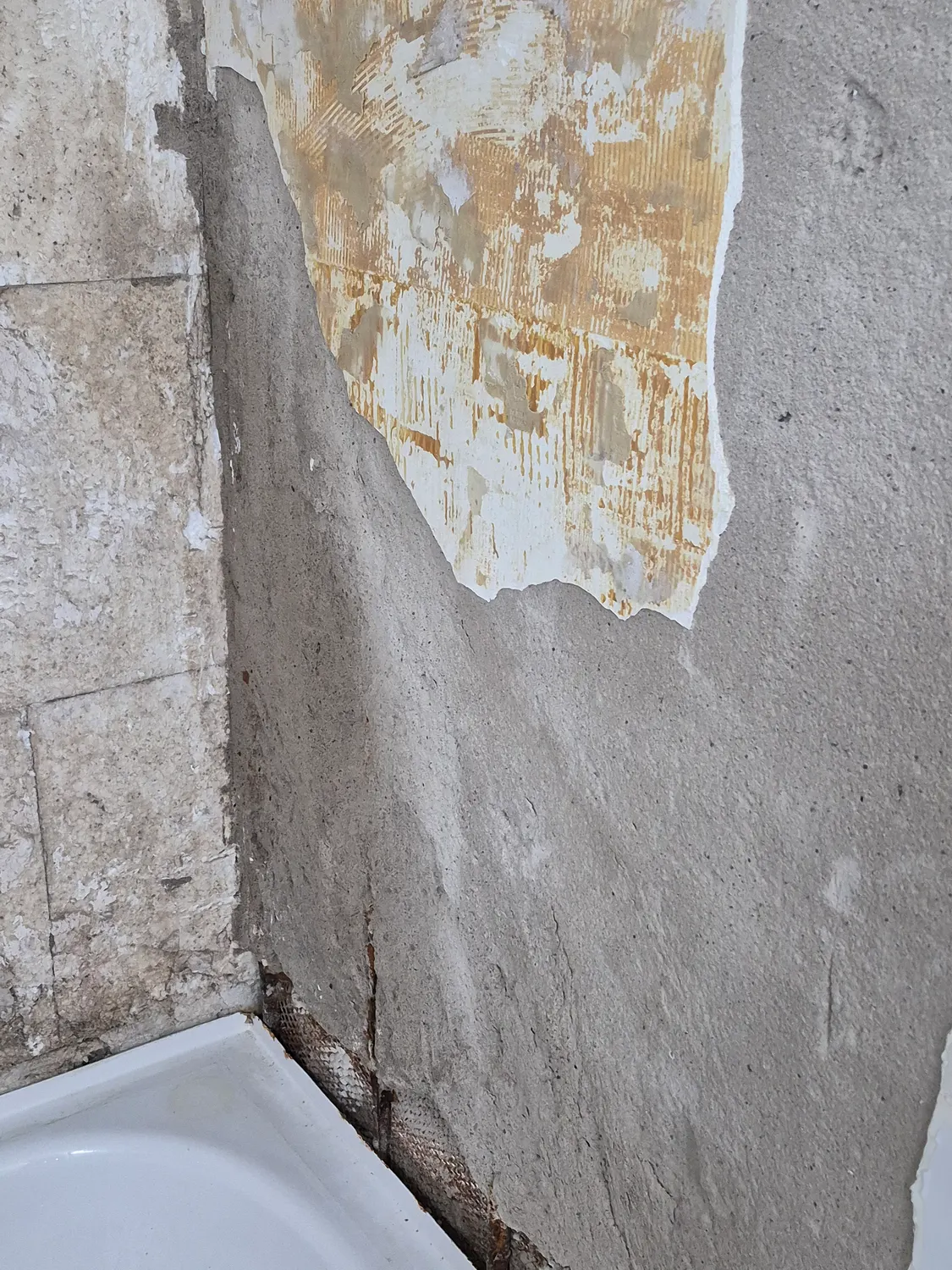
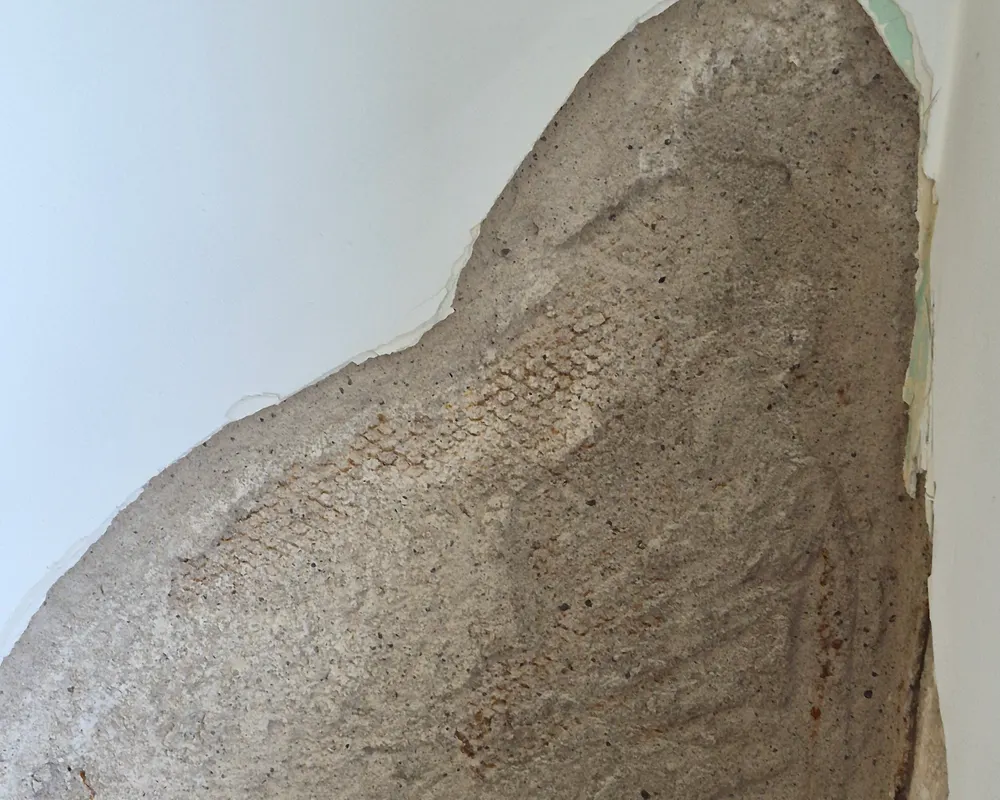
Moisture is the most common cause of damage we see in bathrooms. It does not always show up as a leak. More often it is steam, splashing or a failed seal, working away at a wall for months or years. The wall in the main photo has lost its paint and top layer, and the rough plaster underneath tells the story.
Bare, crumbling plaster
When plaster loses its paint and begins to crumble, water has usually been reaching it from behind or from steam. Rust-coloured streaks and a rough, sandy surface are typical.
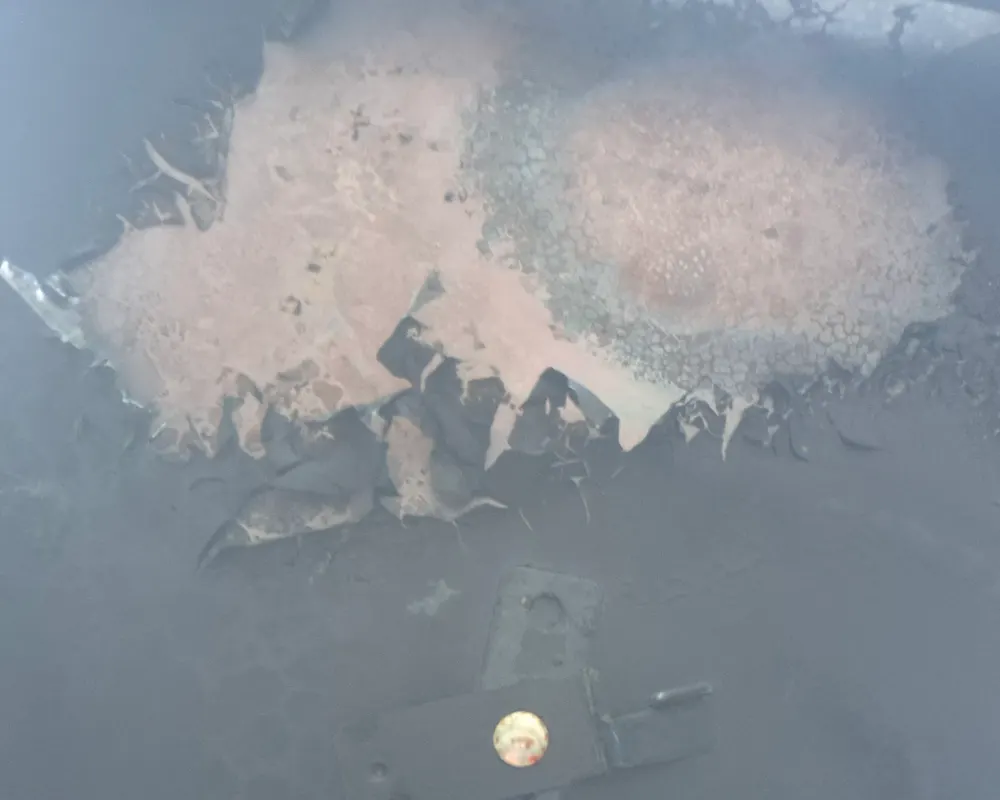
Stained, spotted surfaces
Pale patches ringed with green or dark spots are signs of moisture and growth on a surface that stays damp. A surface like this has to be cleaned, dried and properly repaired, not just painted.
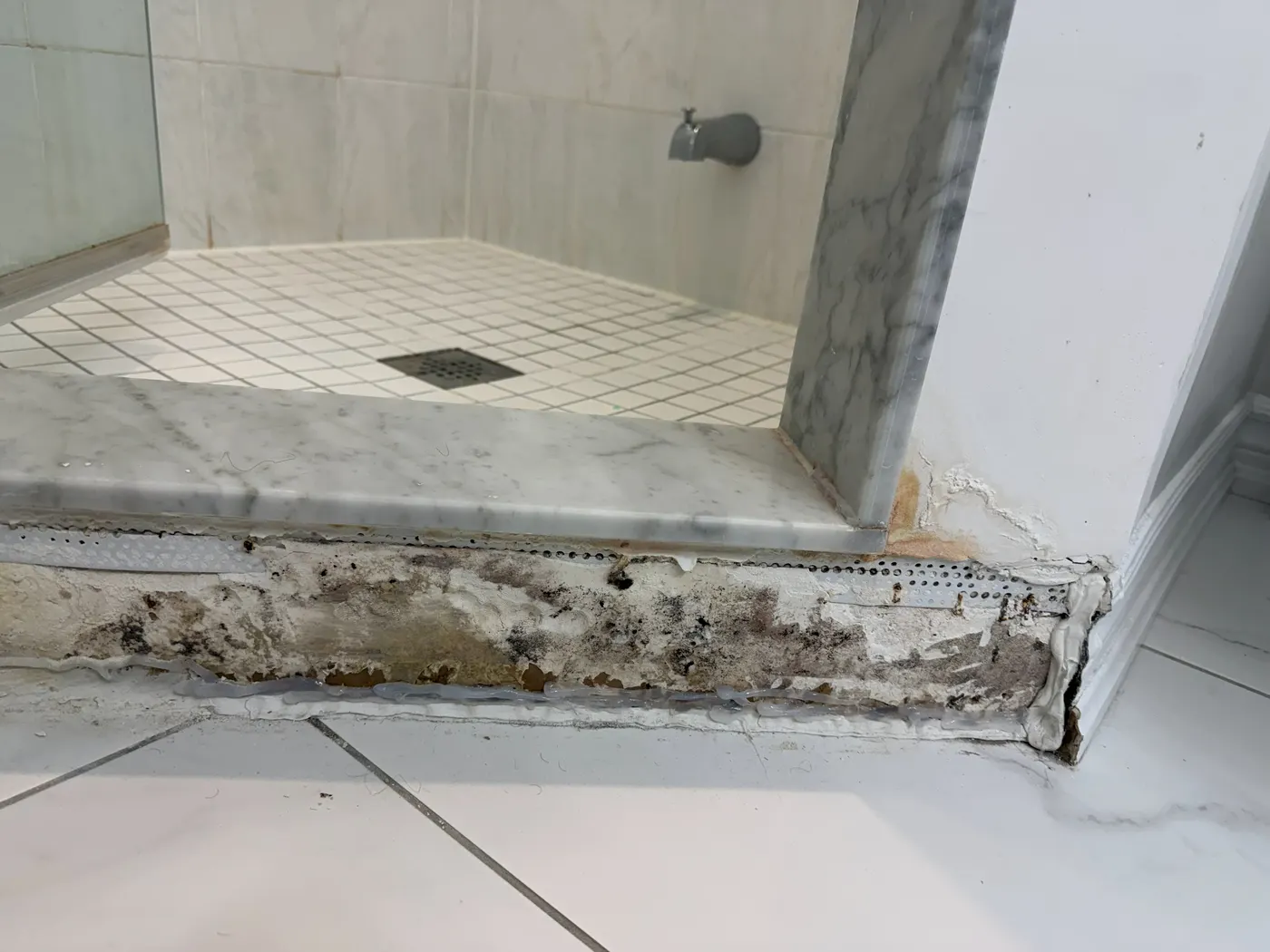
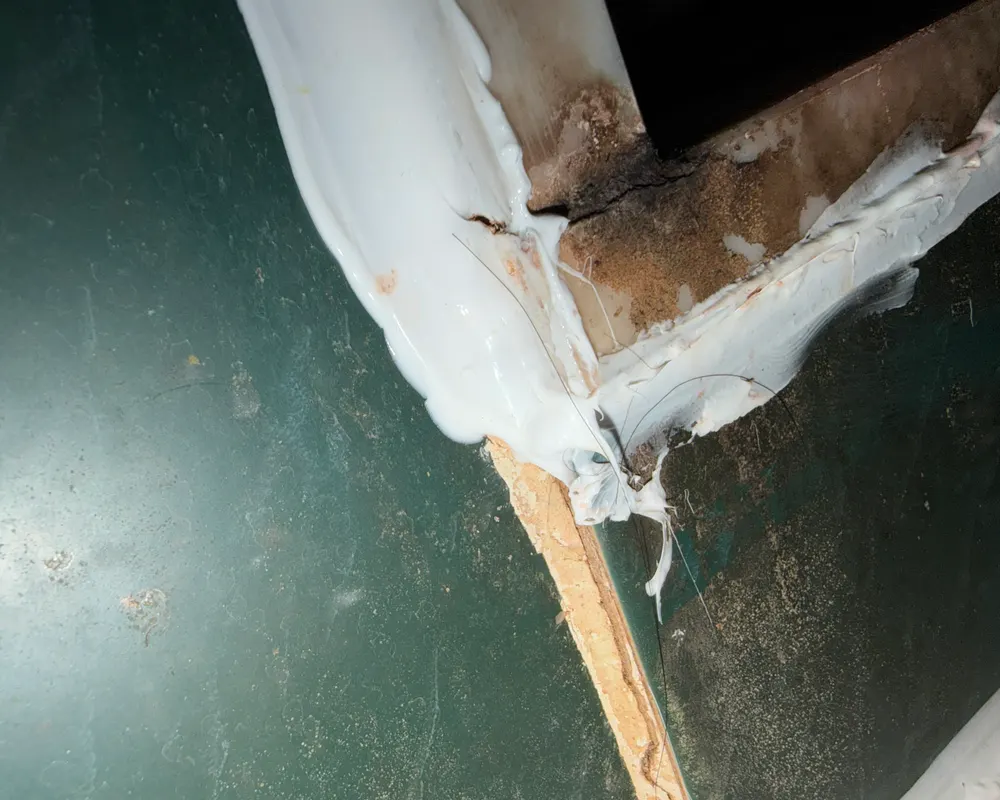
Cracked sealant at the edge
At corners and edges, sealant that has split or turned dark lets water slip behind the surface. Here, the sealant has pulled apart and the material under it is stained and damaged.
What the repair involves
- Find the water source, whether it is a leak, steam or a failed joint.
- Remove soft, loose or contaminated material.
- Let the area dry fully.
- Rebuild the surface, prime and repaint or retile.
- Reseal edges and joints so the problem does not return.
Painting over damage hides it for a few weeks at best. Fixing the cause is what makes the repair last. For a related repair, see our drywall repair in East Gwillimbury.
Noticed peeling or staining that keeps coming back? Request a free estimate and we will look at the job and quote it clearly before we start.
Need a hand with a project?
Book the VOL Handyman team for the work in this article, or anything else around your home or business.