Sink plumbing details: faucet connections, P-traps and drains
Most sink problems are small and fixable: a drip under the basin, a slow drain, a faucet that has come loose. Knowing what is under there helps you describe the problem and helps us fix it fast.
The P-trap and supply lines
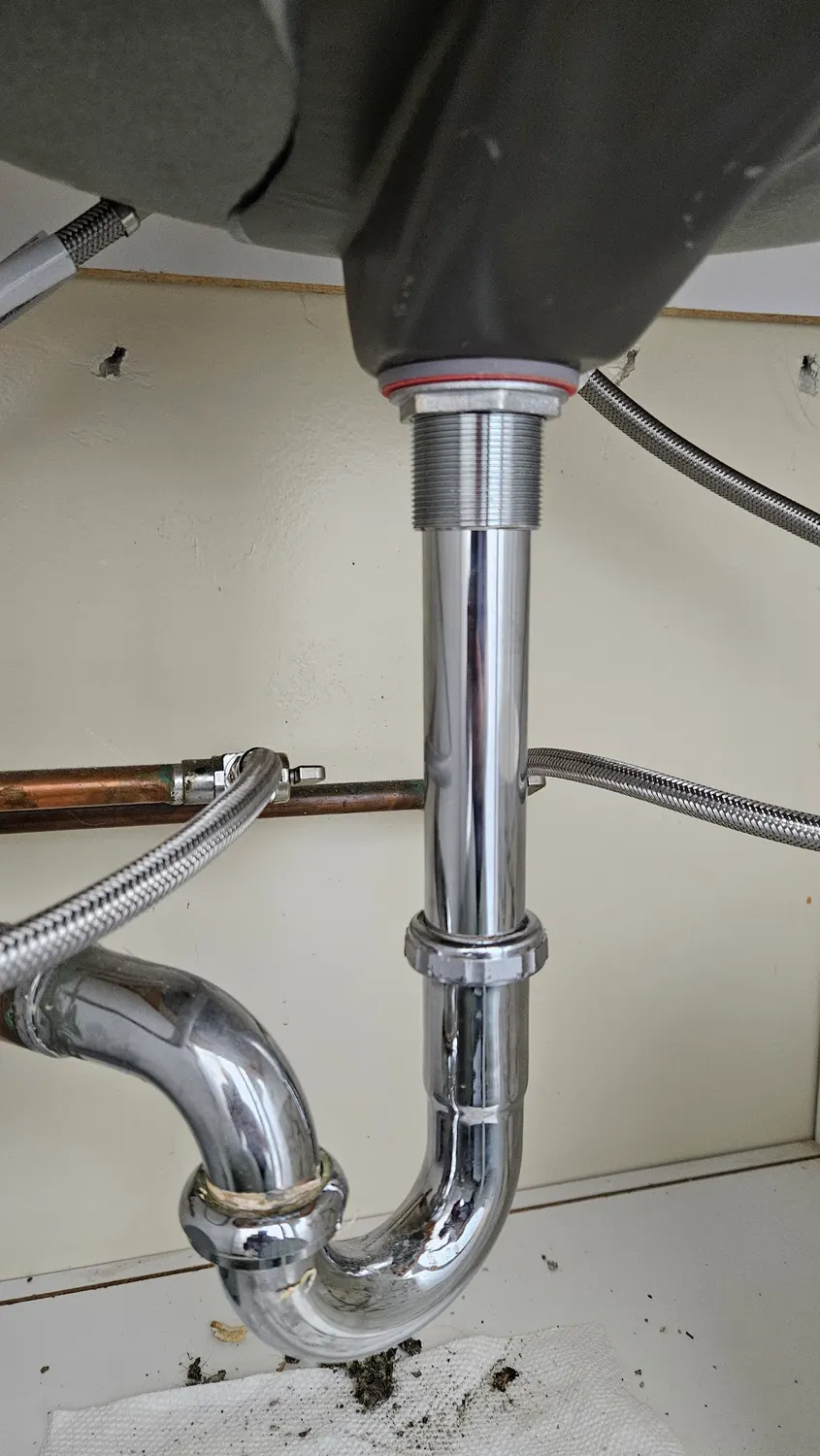
The curved chrome pipe under the sink is the P-trap. It holds a small amount of water to block sewer gas, and it is the first place to look for a drip. Braided supply lines run from the shut-off valves to the faucet, and the fittings at both ends should be snug and dry.
The drain bowl
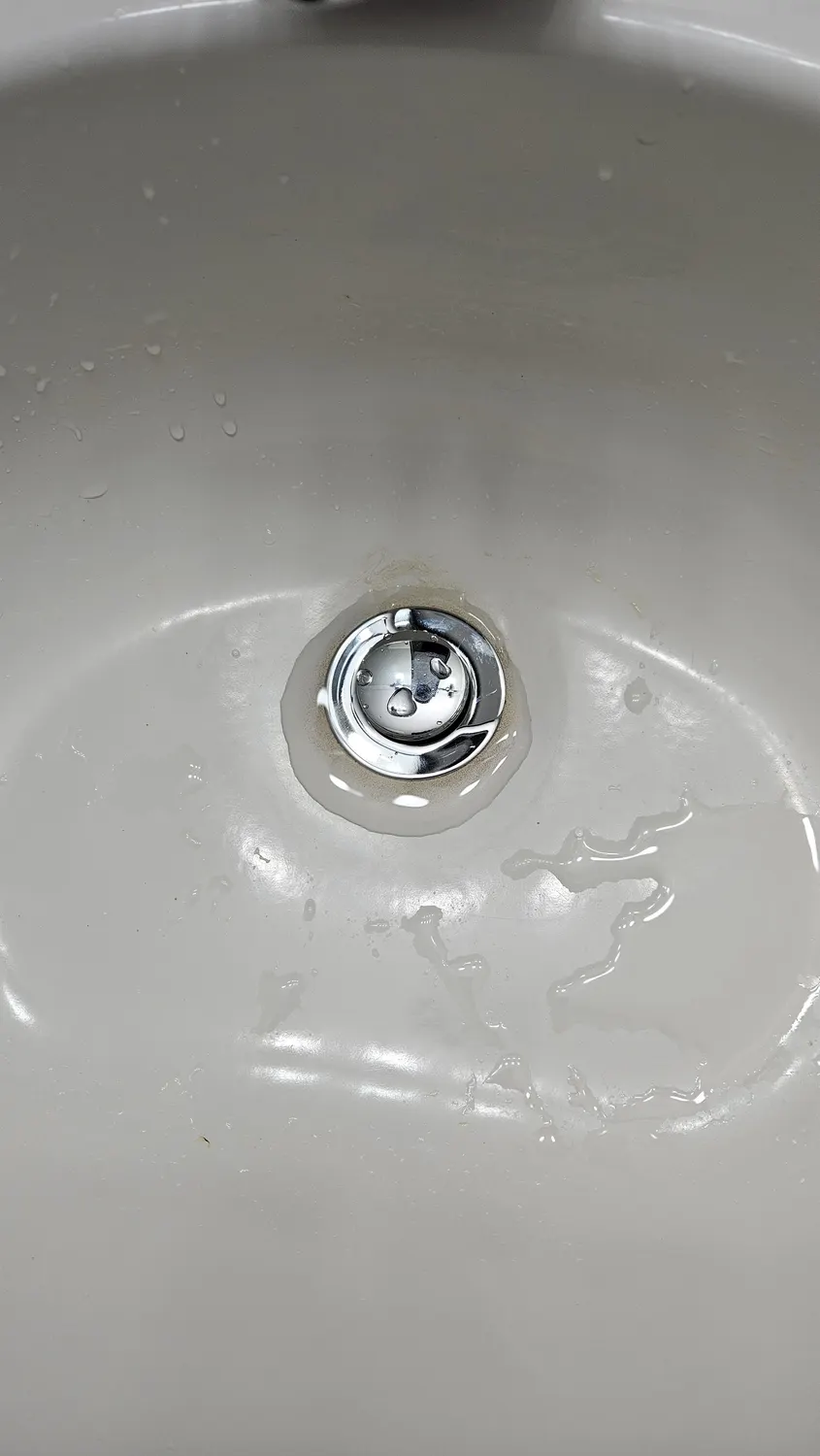
From above, the drain is the part you see daily. A properly seated drain with a tight seal underneath keeps water in the bowl and out of the cabinet.
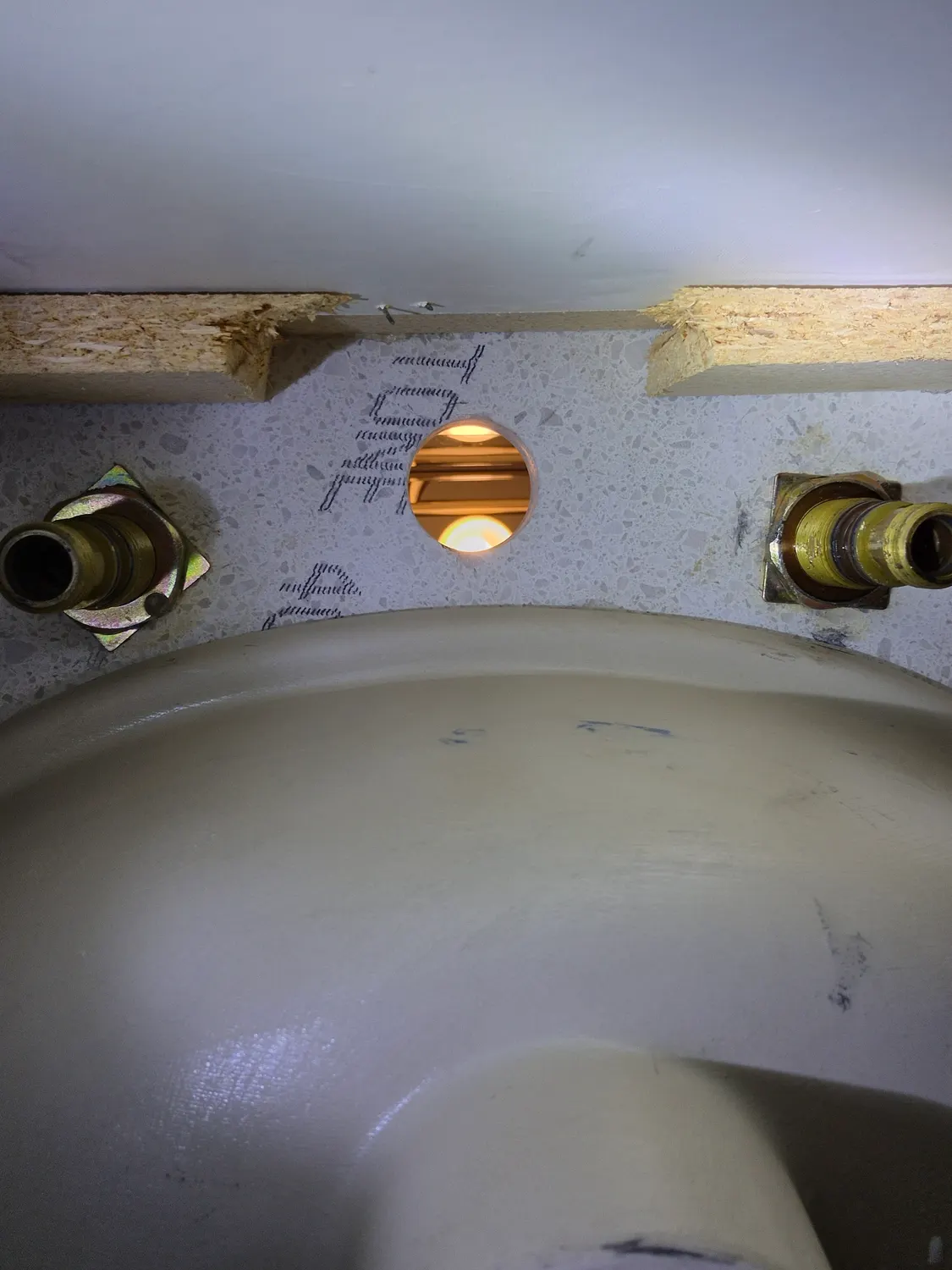
Faucet tailpieces under a counter
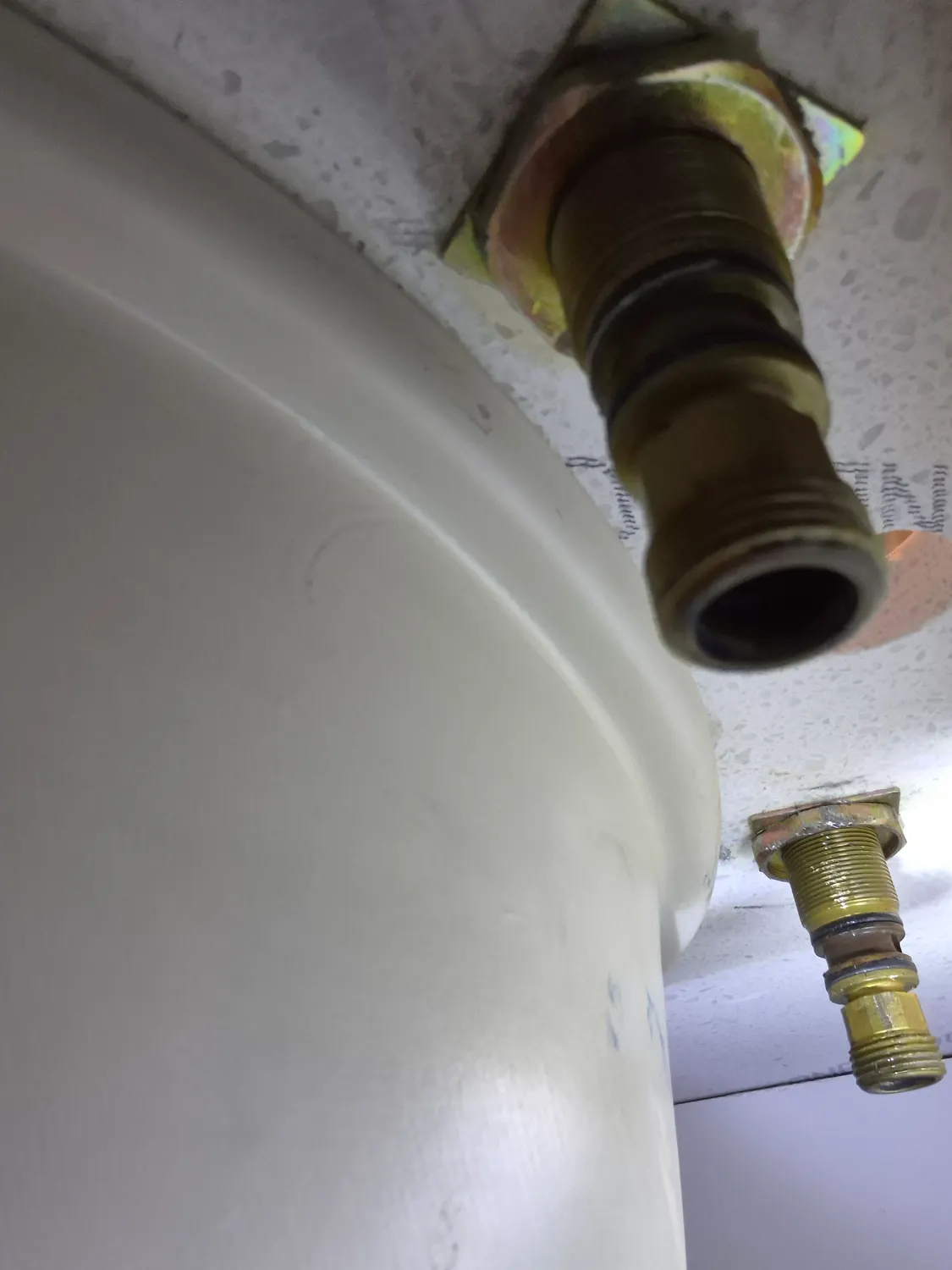
When a faucet is installed through a counter or vanity top, its threaded tailpieces extend below. Supply lines connect to them from underneath, which is why a good fit and clear access matter.
A closer view shows how the brass tailpiece passes through the counter and is held with a mounting plate and nut.
Testing the faucet
After any faucet work we run it through every setting. In this clip, a pull-down spray head is tested over a double sink to check the flow, the hose and the handle.
What to check at home
- Look under the sink with a flashlight for water or staining.
- Run the tap and watch the fittings for drips.
- Check that the faucet does not wobble.
- Make sure the drain empties quickly and quietly.
For a deeper look at a repair like this, see our under-sink plumbing job in Markham.
Have a sink that leaks or drains slowly? Request a free estimate and we will look at the job and quote it clearly before we start.
Need a hand with a project?
Book the VOL Handyman team for the work in this article, or anything else around your home or business.