Why marble shower joints stain and how they are repaired and resealed
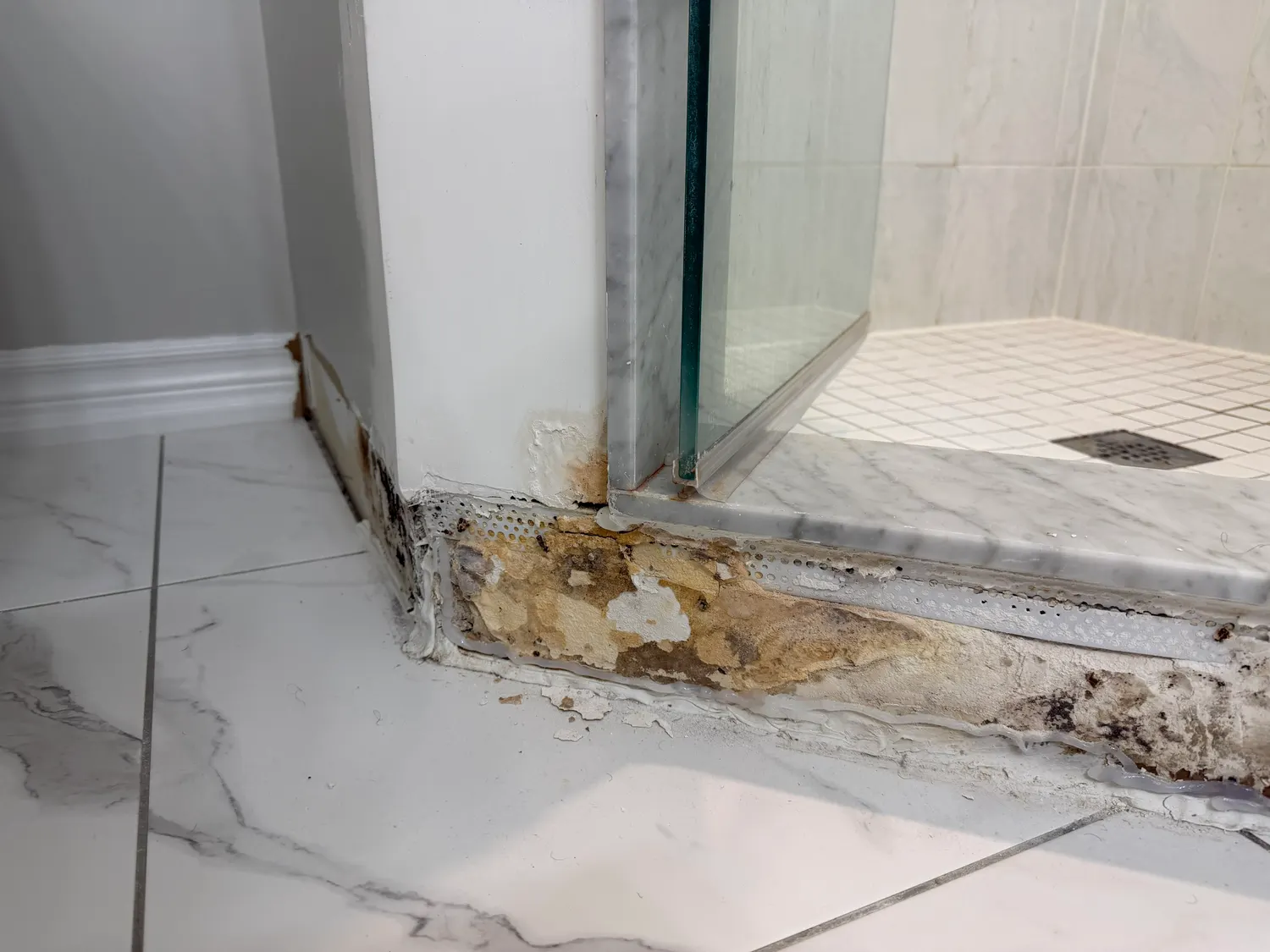
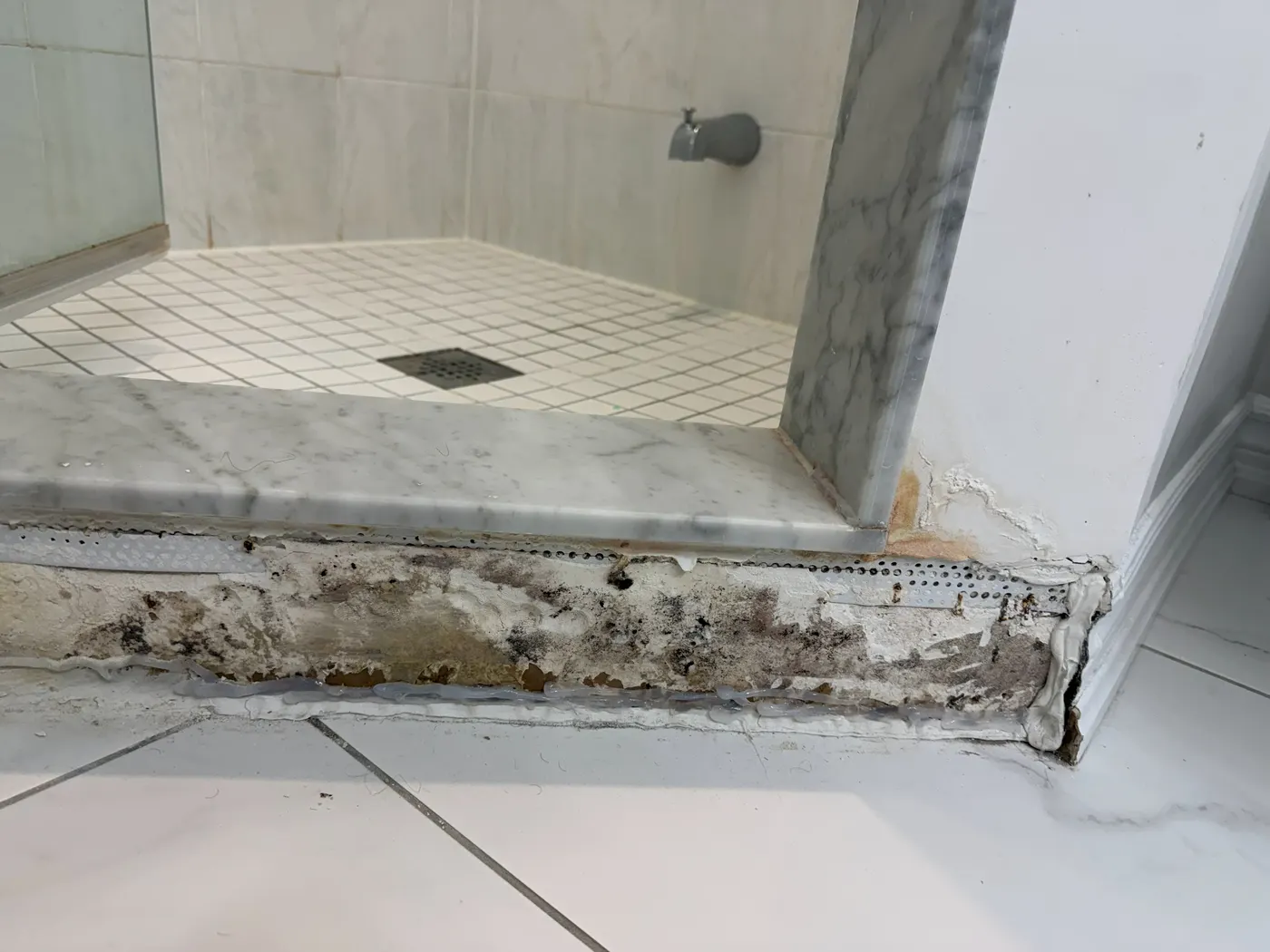
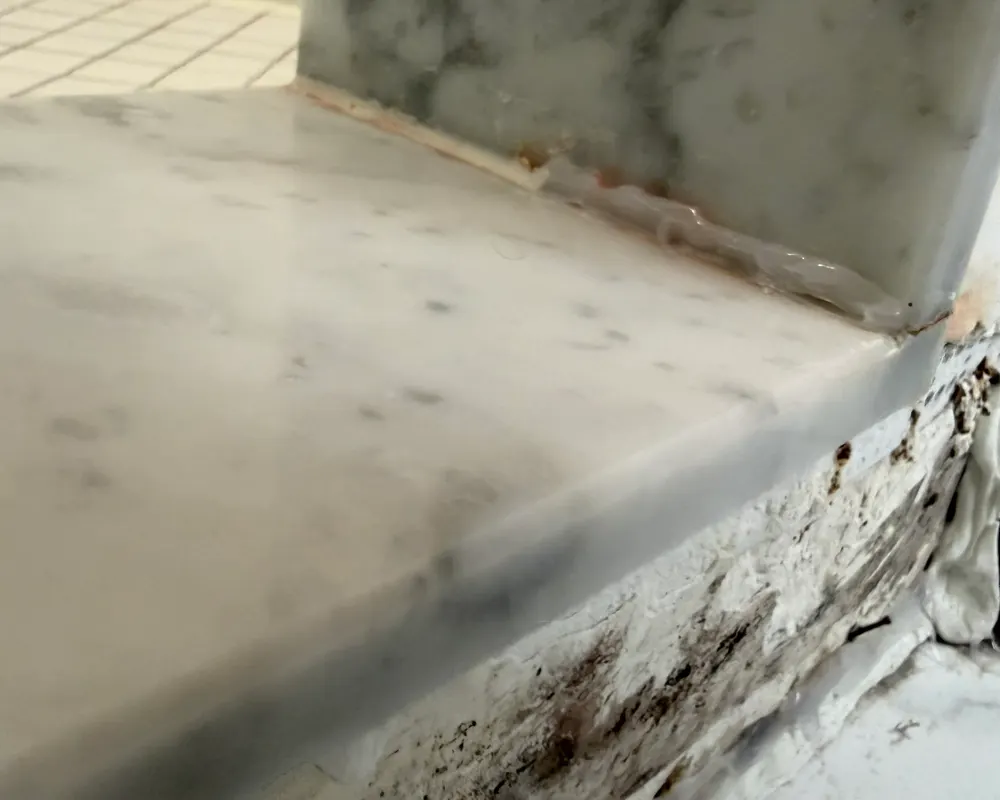
Marble is beautiful and it is also porous. When the joints between marble pieces stain brown or yellow, it is usually a sign that water is getting into the seam and carrying things out with it. In the main photo, the curb at the base of a marble shower has started to show damage along its bottom edge.
Brown lines in the vertical joints
A thin brown line running down a joint between two marble panels is a classic sign. It means water has been travelling through the joint and picking up colour from the material behind it.
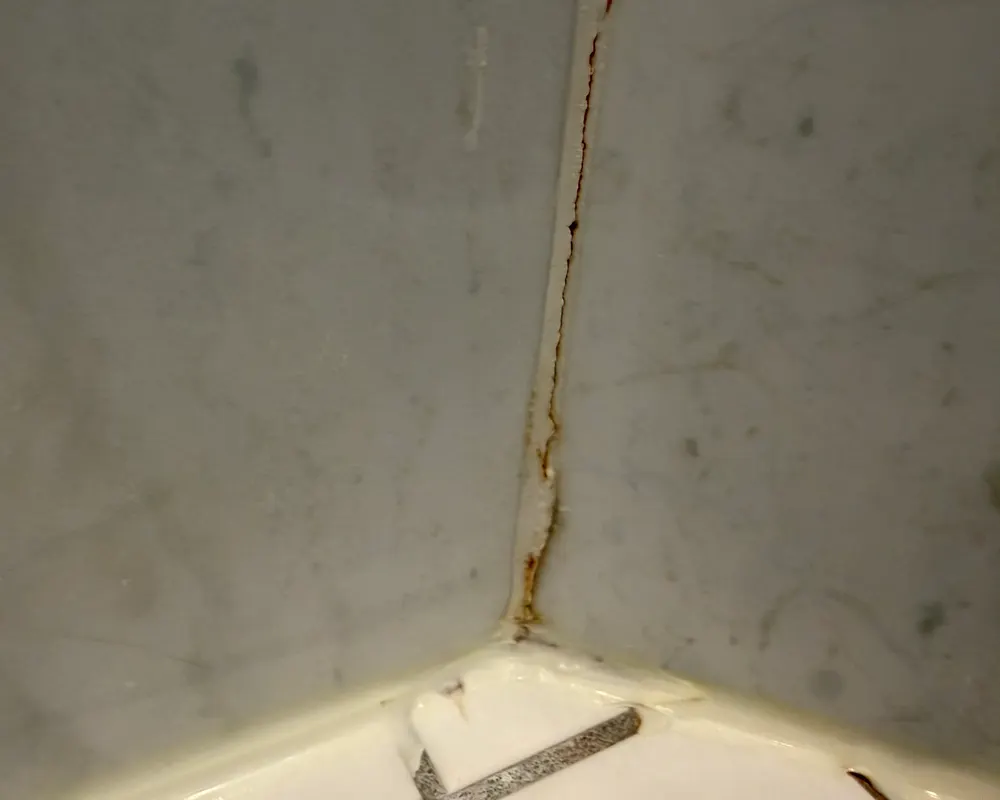
The inside corners
Corners move the most and are where sealant fails first. When the corner joint stains, the base of the wall is usually affected too.
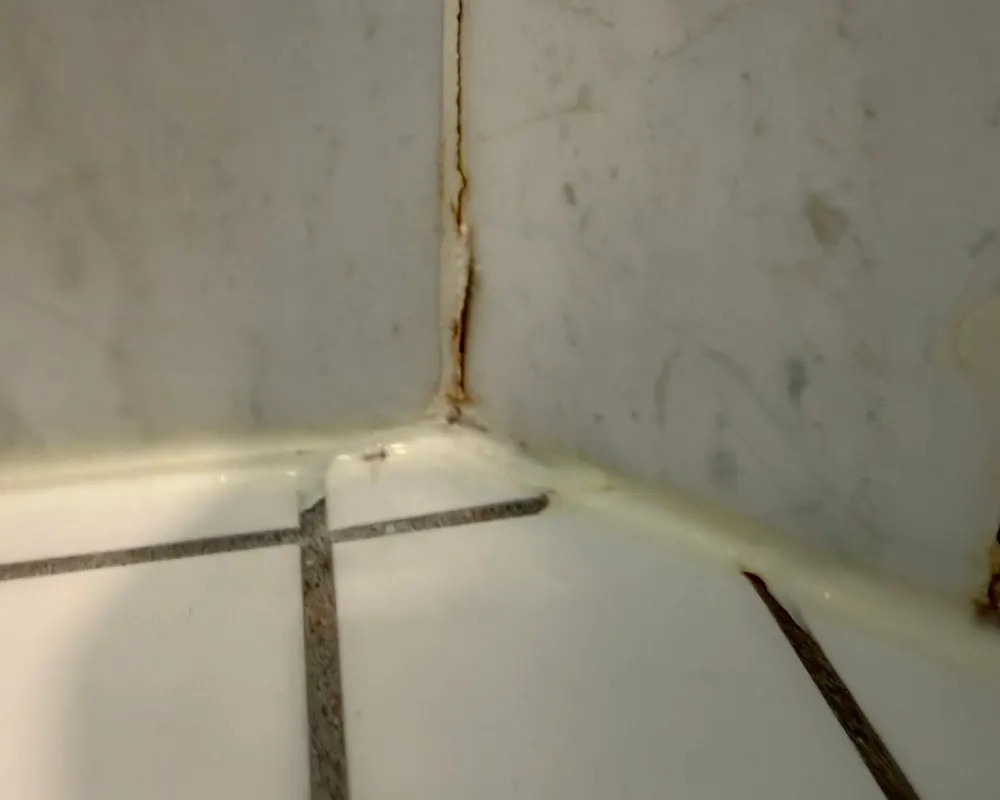
Another seam on the same wall has a different problem.
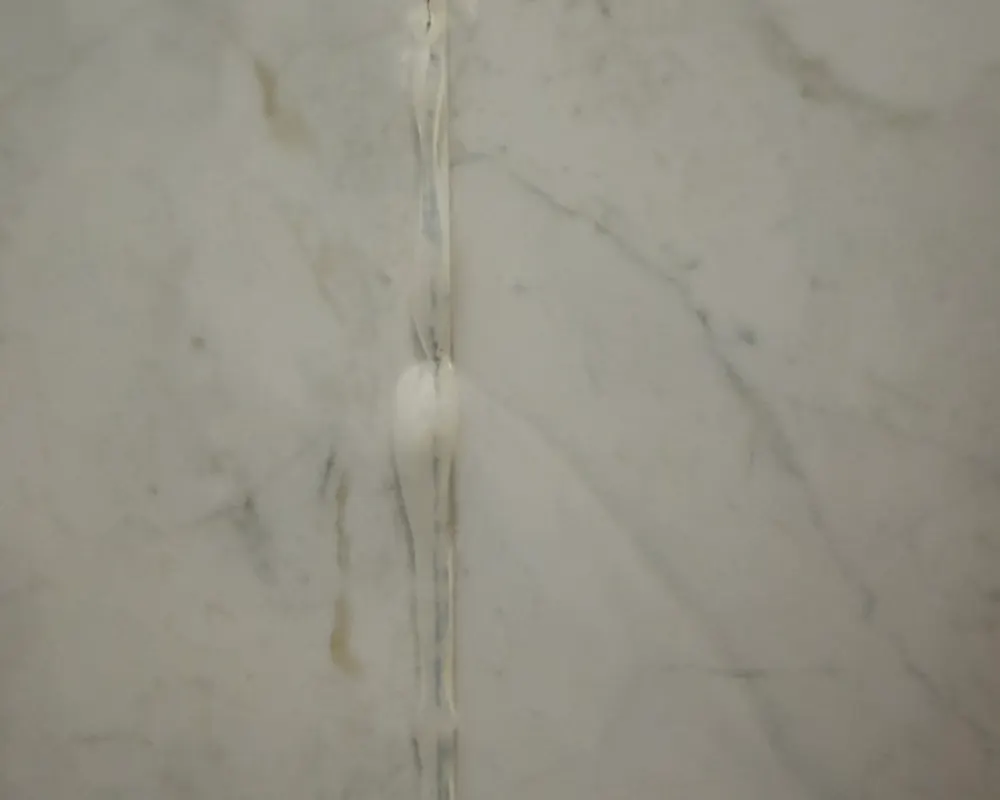
A raised, yellowed bead like this is old sealant that has aged and cracked. It no longer protects the joint.
The curb and base
The top of the curb and the bottom of the wall are where water sits longest. Dark staining and gaps show up here first.
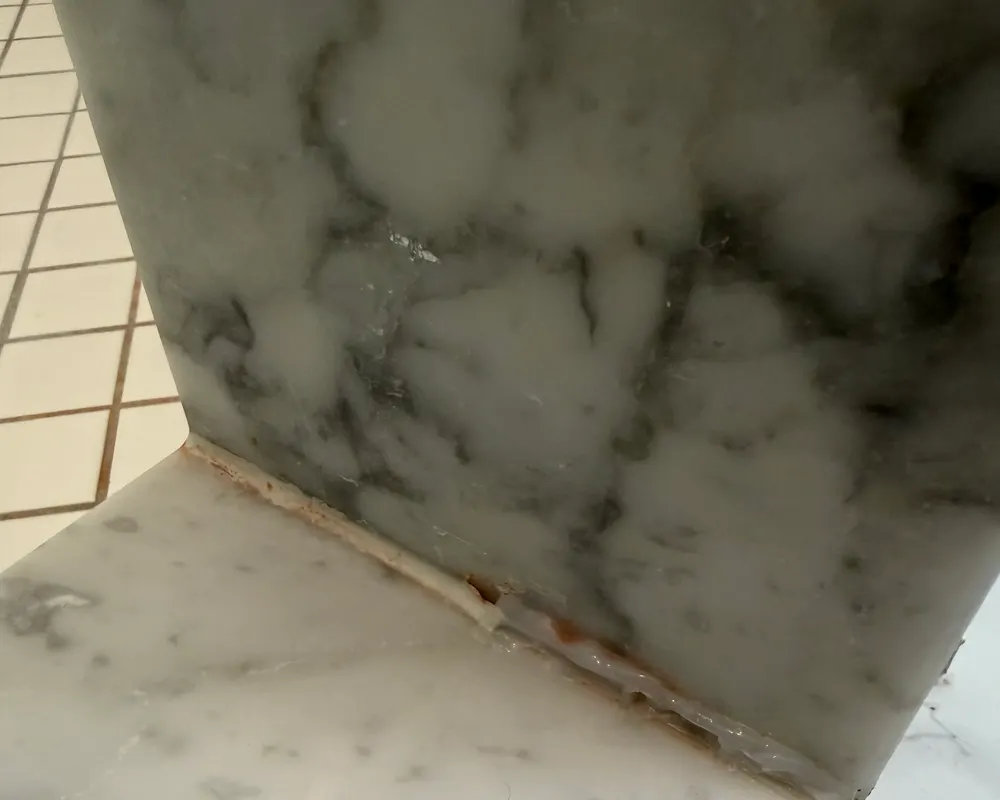
From the side, the staining along the base of the curb is clearer, with brown and black marks right at the joint.
How we repair it
- Remove old sealant and failed grout from the affected joints.
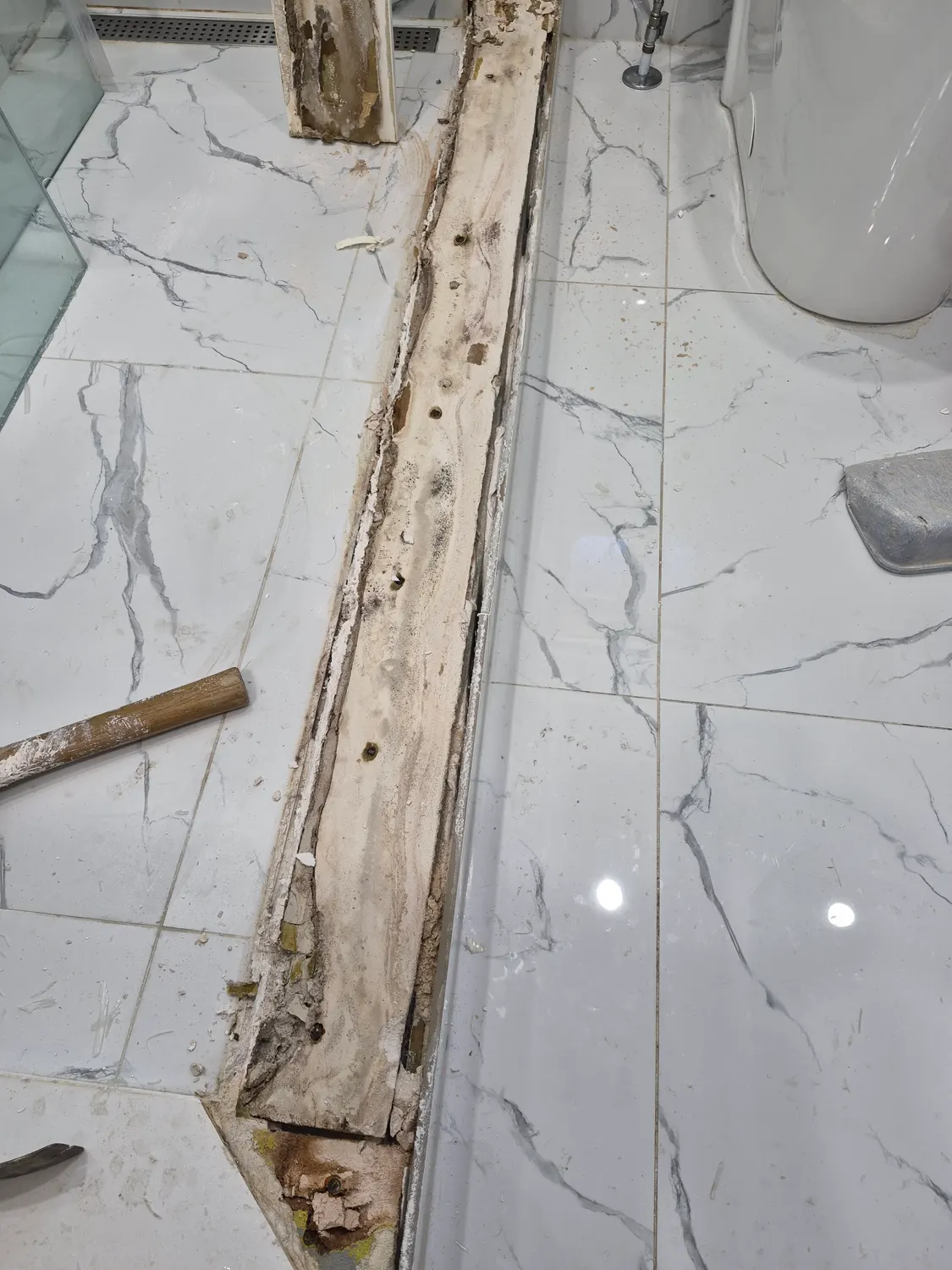
- Check what is behind the joint for moisture and damage.
- Dry the area and repair anything damaged.
- Reseal with the right product for natural stone.
- Apply a stone sealer to reduce future staining.
It is far easier to fix a joint than to rebuild a shower, and the earlier it is done, the less there is to repair. See our guide to shower leak repair in Newmarket for a more serious example.
Seeing brown lines or dark corners in your marble shower? Request a free estimate and we will look at the job and quote it clearly before we start.
Need a hand with a project?
Book the VOL Handyman team for the work in this article, or anything else around your home or business.