How we protect your floors and hallways while we work
Most people worry less about the renovation itself than about what it will do to the rest of the house. Scuffed floors, grey boot prints through the hallway and dust in the bedrooms are all avoidable. It comes down to preparation before we ever pick up a tool.
A protected path from the door to the work
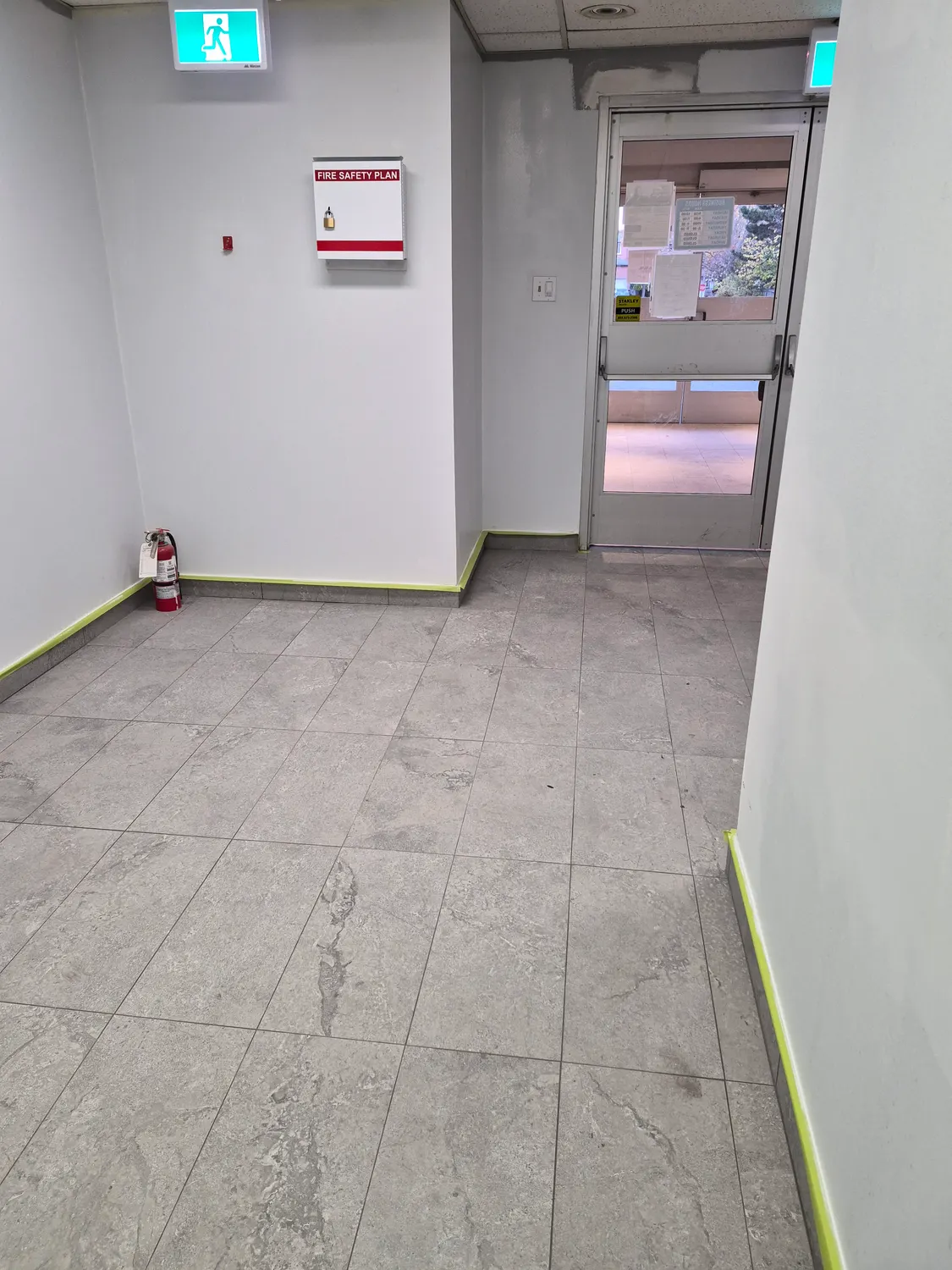
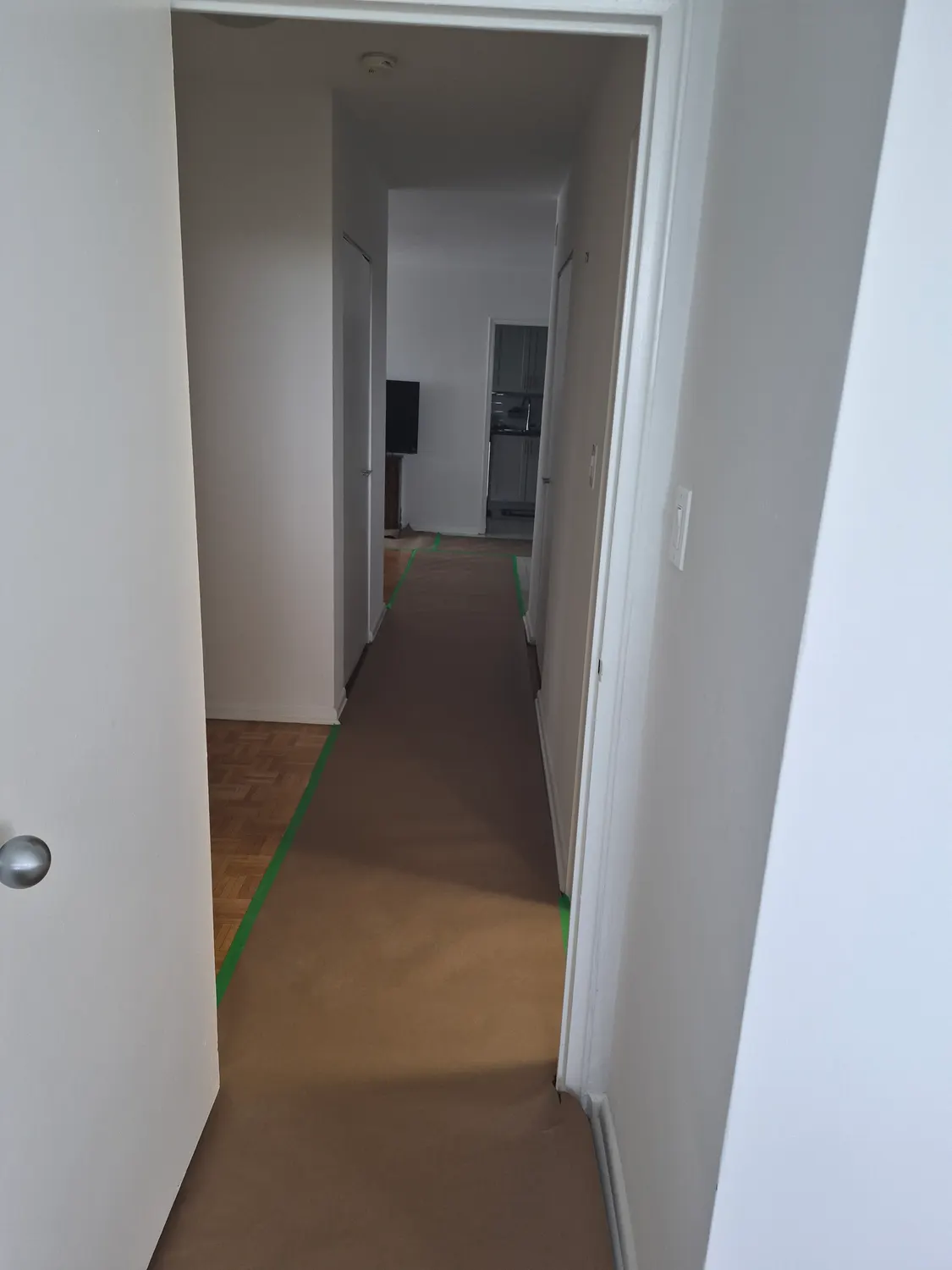
We lay heavy paper along the route we will be walking, from the entrance to the room being worked on. Edges are taped with bright green tape so the covering stays put and the path is easy to see.
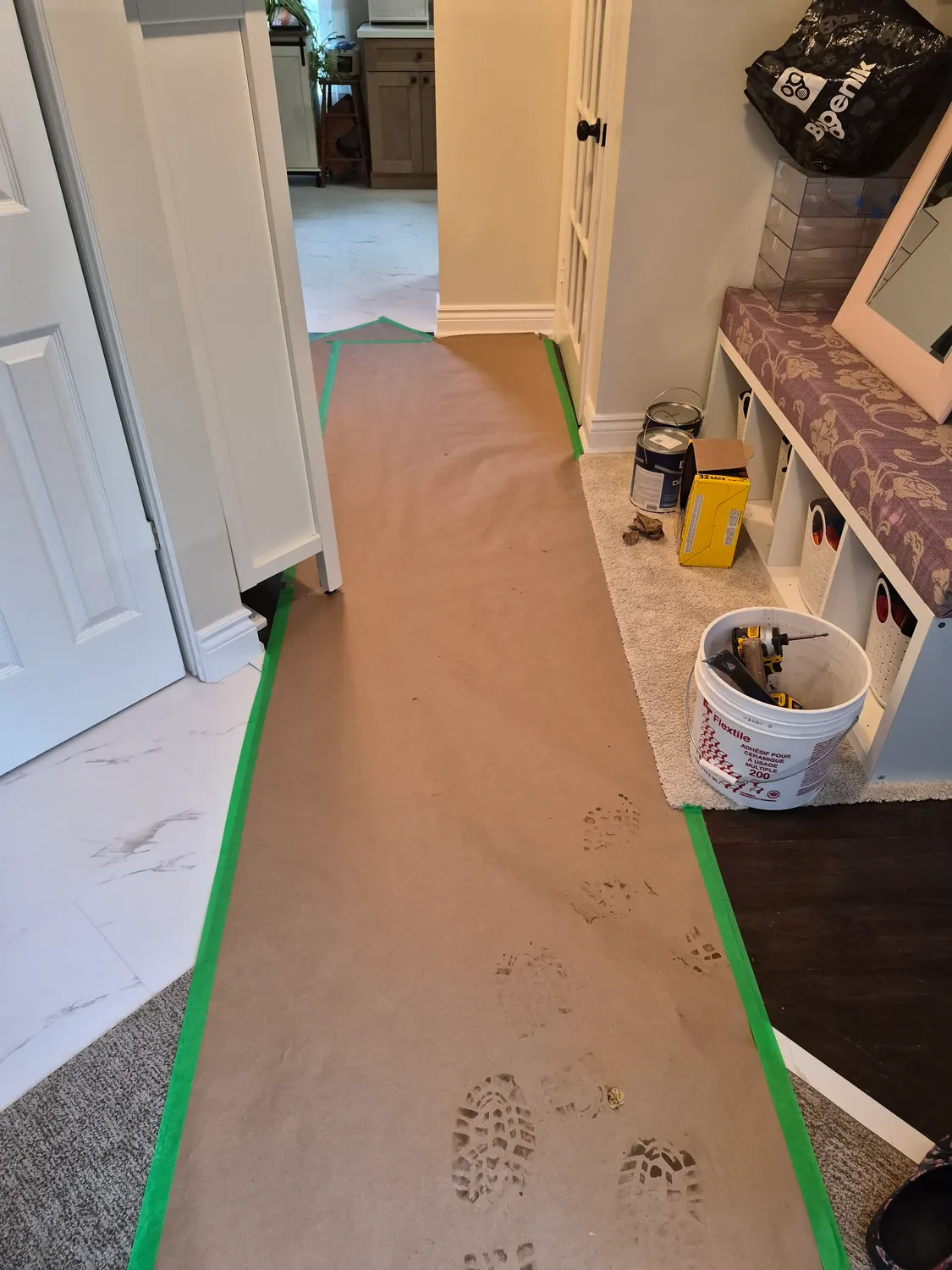
The paper is not just for show. After a day of foot traffic it is the paper that is dusty, not your floor. You can see the footprints it collects in the photo.
Soft protection where it is slippery or delicate
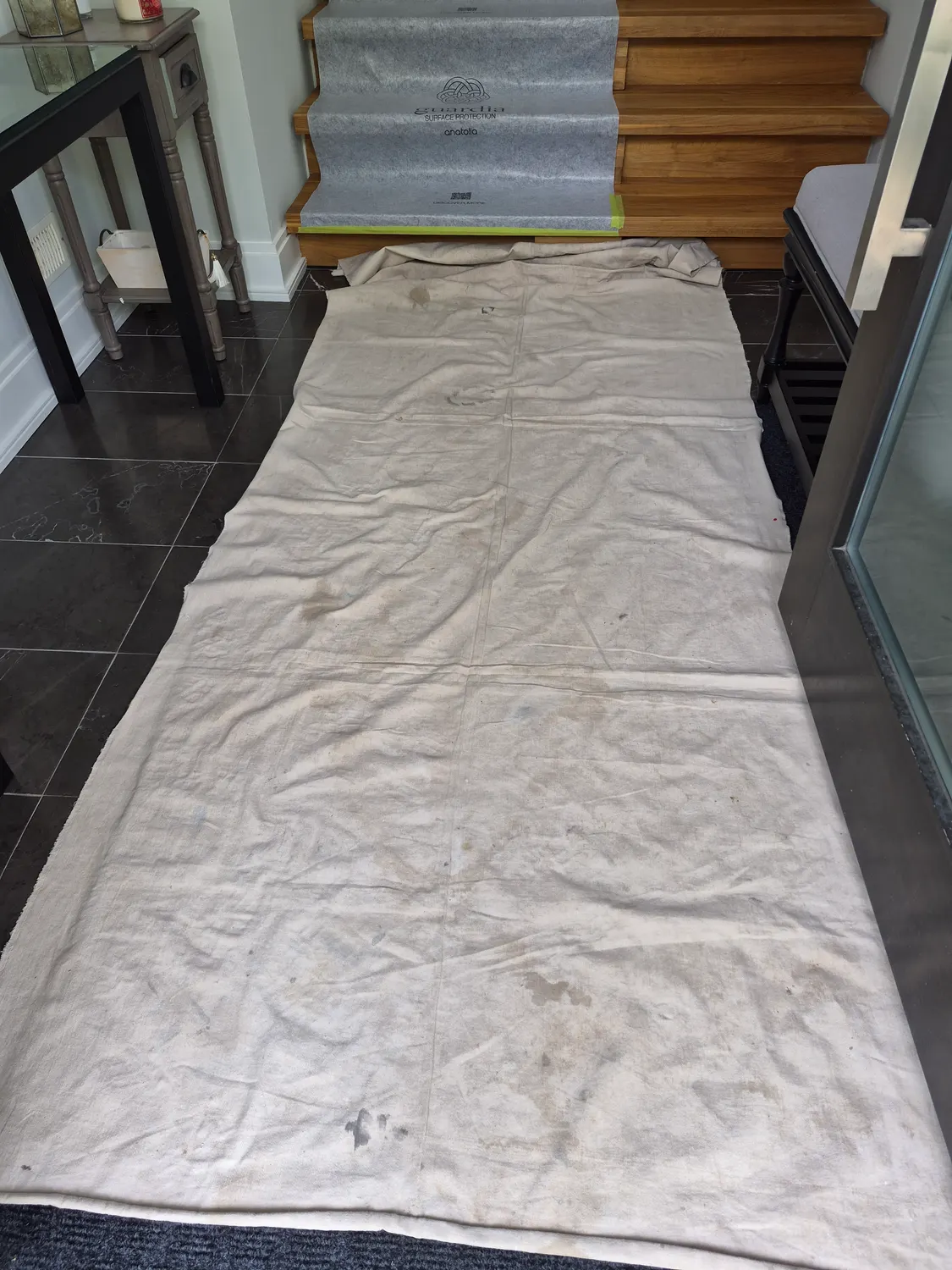
On smooth, dark tile or around the foot of the stairs, a thick towel or runner gives grip and cushions anything that gets set down. It also soaks up grit that would otherwise be ground into the surface.
Stairs get the same treatment
Stairs and hardwood are the most expensive surfaces to repair, so they get the most protection. In this clip, adhesive-backed protective film covers the steps, paper covers the treads and landing, and a drop cloth catches debris at the bottom.
What this saves you
- Scratches and gouges in hardwood, laminate and tile.
- Cleanup time at the end of the job.
- Arguments about who tracked what where.
A clean path also makes the job go faster, because tools and materials move through the house without anyone worrying about damage. It is one of the small habits that separates a tidy renovation from a stressful one.
Want a renovation that leaves your home as it found it? Request a free estimate and we will look at the job and quote it clearly before we start.
Need a hand with a project?
Book the VOL Handyman team for the work in this article, or anything else around your home or business.